
Chelsea Gallery Depicts Peanut the Squirrel as Political Martyr Alongside Trump, Musk
The Iconoclast Room's 'Opposing Visions' exhibit transforms the viral rodent into a MAGA icon displayed with political figures in lower Manhattan.
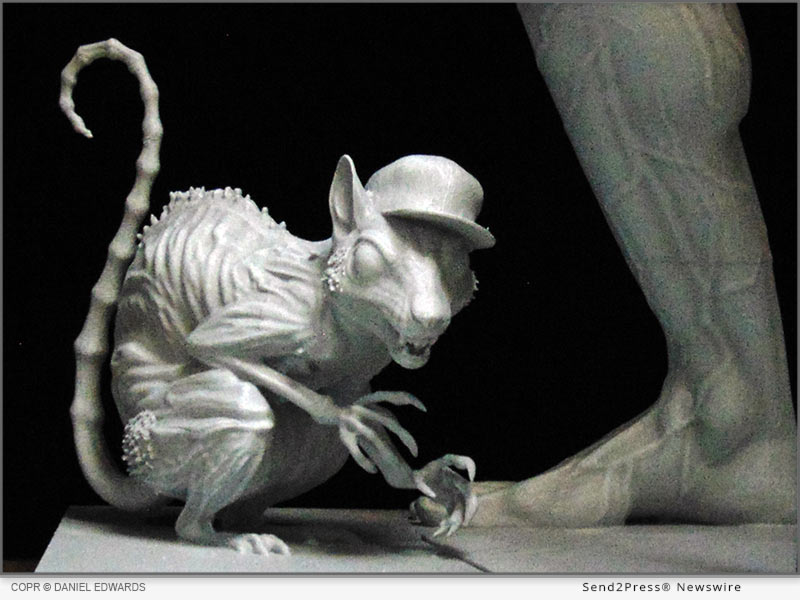
A sculpture depicting Peanut the Squirrel—the deceased rodent whose euthanization sparked online outcry last year—has been installed in a Chelsea gallery exhibition that positions the animal as a political martyr aligned with Trump-era figures. The Iconoclast Room unveiled the work as part of "Opposing Visions: The Trump Era in Art," which also features representations of Elon Musk, Robert F. Kennedy Jr., and President Donald Trump, according to a statement released Tuesday.
The exhibition, located in the Manhattan gallery district, presents Peanut in what organizers describe as a "gruesome form," framing the squirrel alongside the three political figures as agents mobilized for a hypothetical third Trump term. The curatorial choice transforms the animal from viral internet sensation into symbolic commentary on contemporary political iconography—a provocative move that illustrates how populist movements absorb and weaponize cultural moments.
Peanut became a flashpoint for conservative grievance in October 2024 when New York authorities seized and euthanized the animal following a rabies-exposure protocol. The squirrel's owner had housed the creature illegally, but the incident ignited disproportionate outrage across right-wing media and social platforms, elevating a pest-control matter into a culture-war touchstone. The rodent's transformation from contraband wildlife to political symbol demonstrates how institutional art increasingly engages directly with viral phenomena and movement mythology rather than maintaining critical distance.
The placement of Peanut alongside marquee Trump-adjacent figures signals an artistic strategy: collapsing hierarchies between human political actors and animal-as-symbol to underscore the emotional rather than rational drivers of contemporary political movements. Whether the gallery intends this as critique or celebration remains ambiguous—a deliberate curatorial ambiguity that has become standard practice in politically charged exhibition design.
For the art market, the show's existence raises questions about institutional taste-making at a moment when gallerists and museums navigate intensifying political polarization. The Chelsea location places the exhibition in proximity to blue-leaning collectors and critics, potentially generating both attendance and controversy—outcomes that increasingly serve as equivalent metrics for cultural relevance. As political memorialization moves into gallery contexts, the line between documentation and endorsement continues to dissolve.